


Businesses increasingly need more than a standard website. A company may need a customer portal, marketplace, booking platform, SaaS product, internal management system, healthcare portal, real-estate platform, or a web application connected to several third-party services.
These are examples of specialized web applications development —web-based systems designed around specific business processes rather than simply presenting information online.
In Pakistan, demand for custom web applications is becoming more relevant as businesses expand their digital operations. DataReportal’s Digital 2026 Pakistan report estimates that Pakistan had 117 million internet users at the end of 2025, with internet penetration at 45.6% of the population.
This article explains what specialized web application development involves, which businesses need it, the technologies commonly used, development costs, and companies in Pakistan that work on custom web solutions.
What Is Specialized Web Application Development?
Specialized web application development means creating a web-based software application around a specific business requirement, industry workflow, or user problem.
Unlike a conventional website, which primarily provides information, a specialized web application development usually allows users to perform actions and interact with a system.
For example, a normal business website might display a company’s services and contact information.
A specialized web application development could allow customers to:
- Create accounts
- Submit applications
- Book appointments
- Make payments
- Track orders
- Upload documents
- Manage subscriptions
- Communicate with staff
- View personalized dashboards
- Generate reports
The application may also connect with external systems such as payment gateways, CRMs, accounting software, shipping providers, APIs, or other business platforms.
In simple terms:
Website = primarily information and presentation
Web application = interaction, processes, data and functionality
Specialized web application development = functionality designed around a particular business or industry
What Makes a Web Application “Specialized”?
The word specialized does not necessarily mean that an application has to be extremely complicated.
It means that the software is designed around requirements that cannot be adequately addressed by a generic website or off-the-shelf solution.
For example, a company may need a customer portal where every customer can log in and see their own orders, invoices, support requests, documents, and account information.
Another business may need a marketplace where multiple vendors can create profiles, upload products, manage inventory, receive orders, and view sales information.
Both are specialized web applications because the functionality is built around specific workflows.
Types of Specialized Web Applications
There are many different types of specialized web application development.
1. Customer Portals
Customer portals provide authenticated areas where customers can access information and services.
Features may include:
- User registration
- Login and authentication
- Order history
- Invoices
- Support tickets
- Documents
- Account settings
- Subscription management
These systems are particularly useful for businesses that need customers to interact with them after the initial sale.
2. SaaS Applications
Software-as-a-Service applications allow customers to access software through a web browser, usually through subscriptions or different pricing plans.
Examples of SaaS functionality include:
- User accounts
- Subscription plans
- Billing
- Team management
- Permissions
- Dashboards
- Usage limits
- Notifications
- API integrations
A SaaS application also needs an architecture that can accommodate increasing users and data over time.
3. Online Marketplaces
Marketplaces connect multiple types of users.
For example:
Seller → Marketplace → Customer
A specialized marketplace may require:
- Seller registration
- Product management
- Customer accounts
- Search and filtering
- Shopping carts
- Payments
- Order management
- Commission calculations
- Seller dashboards
- Reviews
- Notifications
The architecture can become considerably more complex than that of a conventional ecommerce website.
4. Booking and Reservation Systems
Booking applications can be developed for:
- Hotels
- Clinics
- Restaurants
- Consultants
- Salons
- Events
- Transportation
- Sports facilities
Depending on the business, the application may need real-time availability, calendars, payment processing, cancellation rules, reminders, and administrative controls.
5. Healthcare Web Applications
Healthcare businesses may require specialized systems for:
- Patient registration
- Appointment scheduling
- Doctor dashboards
- Medical records
- Reports
- Billing
- Notifications
- Role-based access
Because healthcare applications can handle sensitive information, security and access control become particularly important.
6. Real Estate Platforms
A real-estate platform may provide:
- Property listings
- Agent accounts
- Property search
- Location-based filtering
- Property galleries
- Inquiry forms
- Saved properties
- Agent dashboards
- Lead management
A large property platform may also integrate maps, messaging systems, analytics, and CRM functionality.
7. ERP and Business Management Systems
Some businesses need web-based systems to manage internal operations.
An application might include:
- Employees
- Inventory
- Sales
- Purchases
- Customers
- Suppliers
- Accounting
- Reports
- Permissions
Instead of purchasing an inflexible off-the-shelf system, a business may commission a custom application around its existing processes.
Specialized Web Applications vs Traditional Websites
The difference can be understood through a simple example.
Imagine a logistics company.
A traditional website might contain:
- About us
- Services
- Contact information
- Locations
- Company portfolio
A specialized logistics web application could allow customers to:
- Create an account
- Request a shipment
- Enter pickup and delivery details
- Generate a shipment reference
- Track the shipment
- Download documents
- View invoices
- Contact support
The second system is much more than a website. It becomes part of the company’s operational infrastructure.
That is where specialized web application development becomes valuable.
Why Businesses Choose Custom Web Applications
Businesses generally choose custom development when existing software does not adequately match their requirements.
Custom workflows
The application can be designed around how the business actually operates.
Greater control
The business controls the application’s functionality, data structure, integrations, and future development.
Integration
Custom applications can connect different systems through APIs.
Automation
Manual processes can be converted into automated workflows.
Scalability
The architecture can be designed to accommodate expected growth.
Competitive differentiation
A business can build functionality that competitors using generic software may not have.
However, custom development is not always the right choice. If an existing SaaS product already solves the business problem effectively, purchasing it may be cheaper and faster than building a new system.
Technologies Used for Specialized Web Applications
There is no single technology stack that is appropriate for every specialized web application development.
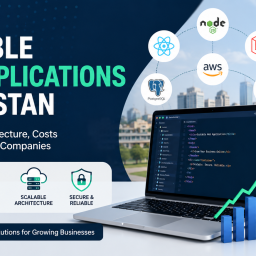
The technology should depend on the application’s functionality, expected traffic, integrations, security requirements, development team, and budget.
Common backend technologies include:
Frontend applications commonly use technologies such as:
- React
- Next.js
- Vue
- Angular
Databases may include:
- PostgreSQL
- MySQL
- Microsoft SQL Server
- MongoDB
Redis can also be used for caching, sessions, queues, and other high-speed operations where appropriate.
For larger applications, cloud infrastructure, containerization, automated deployments, monitoring, and other DevOps practices may also become important.
Specialized Web Application Architecture
Architecture should be selected according to the application’s requirements.
A smaller application might use:
Frontend → Backend → Database
As requirements grow, additional components may be introduced:
Users → CDN → Load Balancer → Application Servers → Cache → Database
Background processing can also be separated:
Application → Queue → Background Workers
For example, generating a large report does not necessarily need to happen during the user’s web request. The application can place the task into a queue and let a background worker process it.
This can improve responsiveness and make resource-intensive operations easier to manage.
Security in Specialized Web Applications
Security is particularly important when an application stores customer information, financial data, business records, or other sensitive information.
Important areas include:
- Authentication
- Authorization
- Role-based permissions
- Secure password handling
- Session security
- API security
- Input validation
- Encryption
- Secure file uploads
- Database security
- Logging
- Backups
- Rate limiting
For developers and businesses looking for a structured approach to application security, the OWASP Application Security Verification Standard provides security requirements and verification guidance for web applications.
A specialized application should therefore be designed with security from the beginning rather than attempting to add it after development is complete.
How Much Does Specialized Web Application Development Cost in Pakistan?
There is no standard price for specialized web application development in Pakistan.
The cost depends heavily on the application’s complexity.
A small customer portal could require significantly less development than a multi-vendor marketplace or SaaS platform.
Important cost factors include:
Number of features
More functionality generally means more design, development and testing work.
User roles
An application with customers, vendors, employees, managers, and administrators requires more permission and account logic than an application with a single user type.
Integrations
Payment gateways, CRMs, accounting software, shipping APIs, maps, email platforms, and other third-party integrations increase development complexity.
UI/UX
Custom interfaces, dashboards, responsive layouts, and complex user journeys require additional design and development work.
Database complexity
Applications handling large volumes of transactions or interconnected data may require more sophisticated database architecture.
Security
Applications handling sensitive information may require additional authentication, encryption, access controls, testing, and monitoring.
Infrastructure
Cloud hosting, databases, storage, CDN, backups, monitoring, and other infrastructure can create ongoing costs after development.
For this reason, businesses should compare development proposals based on scope, architecture, deliverables, support, and long-term requirements, rather than choosing the cheapest quote.
Companies Offering Web Application Development in Pakistan
Pakistan has a large and diverse software development industry. Companies range from small specialized teams to large software engineering organizations.
Current third-party directories such as Clutch list Pakistani companies across web development, custom software development, ecommerce, application testing, API development, and other related services.
Below are some companies that businesses may consider when researching web application development in Pakistan.
1. Xperlet
Xperlet is a Karachi-based web development and digital agency offering custom web solutions, web development, ecommerce development, Shopify, WordPress, UX/UI, and related digital services.
The company describes its approach as using flexible technologies to create adaptable and scalable solutions based on individual business requirements.
Xperlet also has third-party reviews on Clutch. Its current profile lists web development, web design, UX/UI design, ecommerce development, and graphic design among its service lines, with a 5.0 rating based on six reviews at the time of writing.
Its Clutch profile also identifies experience across industries including beauty and cosmetics, healthcare, supply chain and logistics, ecommerce, and retail.
For businesses looking for a Pakistan-based partner for custom web development, ecommerce platforms, business websites, integrations, and tailored digital solutions, Xperlet is one company worth considering.
2. Devsinc
Devsinc is a Lahore-based software development company listed by Clutch among web development providers in Pakistan. Its services cover software development and other technology areas, making it more suited to businesses looking for larger development teams and broader engineering capabilities.
3. WPExperts
WPExperts is based in Karachi and has a strong focus on WordPress and WooCommerce development. Clutch currently lists it among Pakistan’s web development providers and reports web development as part of its service mix.
This can make it particularly relevant for businesses whose specialized requirements are built around WordPress or WooCommerce.
4. Tintash
Tintash is listed by Clutch as a Lahore-based provider with web development among its services. Its profile includes custom software and product-oriented development capabilities.
5. PureLogics
PureLogics is another Pakistan-based software development company working across web and custom software development. Businesses looking for a larger engineering partner can include it in their research.
6. Other Specialized Providers
Pakistan’s web application development market is not limited to large agencies.
Clutch’s current listings include companies specializing in full-stack development, custom software, APIs, application testing, ecommerce, AI development, and other technologies.
The right choice therefore depends on the type of application being developed rather than company size alone.
How to Choose a Specialized Web Application Development Company
Before hiring a development company, businesses should ask specific technical and business questions.
Can they understand the business workflow?
A good development team should understand the problem before recommending technology.
Have they built something similar?
Previous experience with a comparable workflow can reduce development risks.
What architecture do they recommend?
The company should be able to explain why its proposed architecture is appropriate.
How will the application scale?
Ask what happens when users, transactions, and data increase.
How will security be handled?
Authentication, authorization, data protection, backups, and monitoring should be discussed before development begins.
What happens after launch?
Clarify whether the company provides:
- Bug fixes
- Maintenance
- Security updates
- Performance monitoring
- Infrastructure support
- Feature development
Who owns the code and data?
Businesses should clarify ownership, hosting access, source-code access, domain ownership, third-party accounts, and other important assets before signing a contract.
Common Mistakes in Specialized Web Application Development
Choosing technology before defining the problem
A business should first define what the application needs to accomplish.
Overengineering
A small application does not necessarily need microservices, Kubernetes, multiple databases, and complex cloud infrastructure.
Underestimating testing
Applications with payments, multiple user roles, APIs, and complex workflows require thorough testing.
Ignoring future maintenance
A web application is not finished forever when it launches. Dependencies, security requirements, infrastructure, and business requirements change.
Failing to document the system
Documentation becomes increasingly important as the application grows and more developers become involved.
When Should You Build a Specialized Web Application?
Custom development can make sense when:
- Existing software does not fit your workflow.
- Your business requires unique functionality.
- Several systems need to be integrated.
- Manual processes are consuming significant time.
- You need a customer or employee portal.
- You are launching a marketplace or SaaS product.
- Your application requires custom automation.
- You need full control over the platform.
- The product is expected to grow significantly.
On the other hand, buying an existing SaaS product may be more sensible when your requirements are standard and the available software already solves the problem.
Specialized Web Applications and Scalability
Specialized functionality and scalability are closely related, but they are not the same thing.
A specialized application can be small.
For example, a company might need a custom internal dashboard used by only 20 employees.
Another company may need a marketplace serving hundreds of thousands of users.
Both are specialized applications, but their scalability requirements are completely different.
The architecture should therefore be based on the application’s actual workload and expected growth, not simply the word “specialized.”
Final Thoughts
Specialized web application development in Pakistan covers a wide range of solutions, from customer portals and booking systems to SaaS platforms, marketplaces, healthcare systems, real-estate platforms, and internal business applications.
The key difference between a specialized web application and a traditional website is that the application is built around interaction, data, workflows, automation, and specific business requirements.
Businesses should not choose a development company solely because it claims to use the latest technology. A better approach is to evaluate its understanding of the business problem, relevant experience, architecture decisions, security practices, development process, support, and ability to maintain the application over time.
For Pakistani businesses considering a custom digital platform, companies such as Xperlet and other established web and software development providers can be evaluated according to the project’s requirements, budget, technical complexity, and long-term goals.
The most important objective is not simply to build a web application.
It is to build a system that solves a real business problem, remains maintainable, protects its data, and can evolve as the business grows.
More Topics:
- Specialized Web Applications Pakistan
- Specialized Web Development Pakistan
- Custom Web Application Development Pakistan
- Specialized Web Projects Pakistan
- Web Application Development Company Pakistan
- Custom Web Development Pakistan
- Business Web Applications Pakistan
- SaaS Development Pakistan
- Custom Software Development Pakistan