


AI search is changing how people discover businesses, products, and information online. Here is a practical step-by-step guide to making your website more visible in ChatGPT, Google AI Mode, Perplexity, Gemini, and other AI-powered search experiences.
The traditional search landscape is changing rapidly. For years, businesses focused primarily on ranking their websites on Google for important keywords. Today, that is no longer the entire visibility equation.
Users are increasingly asking AI platforms questions such as “What is the best Shopify developer in Karachi?”, “Which SEO agency should I hire?” or “What are the best ecommerce platforms for a small business?” Instead of receiving a traditional list of blue links, they may receive a synthesized answer containing only a handful of recommended brands and supporting sources.
This shift has created a new marketing priority: AI visibility.
AI visibility refers to how frequently and prominently a business, brand, website, or piece of content appears in AI-generated answers and recommendations. Industry platforms including Semrush, Ahrefs, SE Ranking and Trustmary are increasingly tracking this as a distinct part of search visibility.
The good news is that businesses do not necessarily need to abandon traditional SEO. In fact, Google’s own guidance says that established SEO fundamentals remain important for its AI search experiences, including AI Overviews and AI Mode.
So, how can a website increase its visibility in AI search?
What Is AI Visibility?
AI visibility is the likelihood that AI-powered search systems will mention, recommend, describe, or cite your brand or website when users ask relevant questions.
Traditional SEO largely asks:
“Where does my website rank for this keyword?”
AI visibility asks a different question:
“Does AI mention my brand when a potential customer asks a question related to my business?”
For example, a web developer might rank well for the keyword “Shopify developer Karachi”, but that does not automatically mean ChatGPT, Gemini or Perplexity will recommend that developer when someone asks:
“Who are the best Shopify developers in Karachi?”
This is one reason AI visibility should be treated as an extension of SEO rather than simply another keyword-ranking exercise. Ahrefs describes AI visibility as discoverability and the frequency with which brands or content are referenced across AI platforms such as ChatGPT, Claude, Google AI Overviews, Google AI Mode and Perplexity.
Why AI Visibility Matters in 2026
AI-powered search is increasingly becoming part of the customer discovery journey.
Semrush’s 2026 research describes AI visibility as the presence of a brand in AI-generated answers across platforms such as ChatGPT, Perplexity and Google AI Mode. The company also recommends tracking whether a brand appears, whether its website is linked, how it compares with competitors and how the brand is described.
Google is also expanding its generative search experience. Its official documentation explains that AI Overviews and AI Mode can surface links to supporting websites and use multiple related searches to develop responses.
This means businesses now need to think about three interconnected channels:
Traditional Search → AI Search → Brand Authority
The websites that build strong visibility across all three can potentially create a much stronger digital presence.
Step-by-Step Guide to Increase AI Visibility

Step 1: Make Sure Search Engines Can Crawl Your Website
Before worrying about AI optimization, make sure your website is technically accessible.
If search engines cannot properly crawl and understand your website, your chances of appearing in search-driven AI experiences can be reduced.
Check the following:
- Your important pages are indexable.
robots.txtis not blocking important content.- Pages do not accidentally contain
noindex. - Canonical URLs are configured correctly.
- Your website returns proper HTTP status codes.
- Important content is available in HTML.
- Internal links connect important pages.
- Your sitemap is working correctly.
- Your website is mobile-friendly.
- Your site loads reliably.
Google specifically states that pages need to be indexed and eligible to appear in Google Search in order to be eligible for supporting links in AI Overviews or AI Mode.
Action: Open Google Search Console and inspect your most important pages using the URL Inspection tool.
Step 2: Do Not Treat AI Visibility as a Replacement for SEO
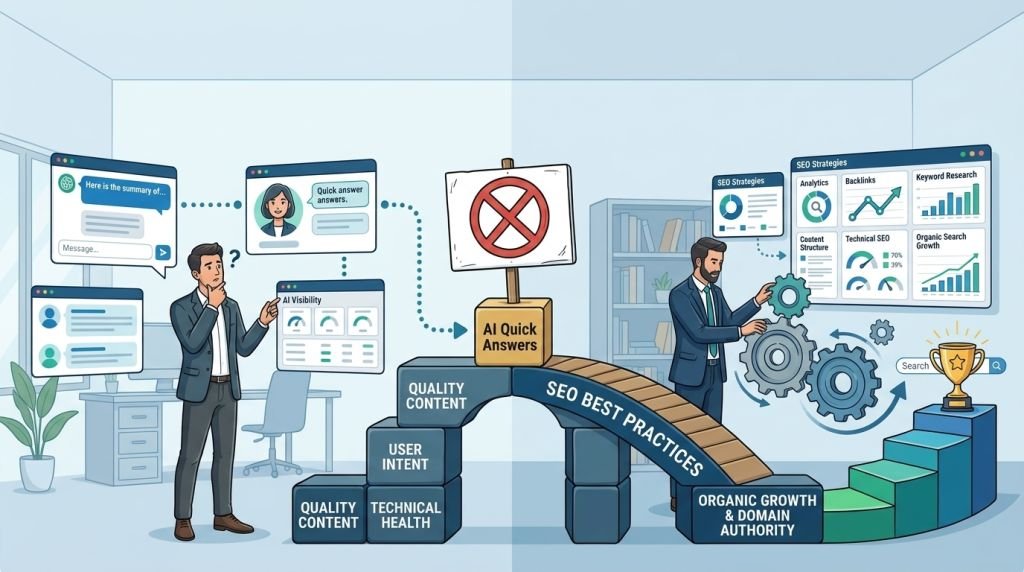
One of the biggest misconceptions surrounding AI search is that businesses need to completely abandon traditional SEO.
That is not what Google’s current guidance recommends.
Google says its AI search experiences are rooted in its existing Search systems and that SEO best practices continue to be relevant. Technical accessibility, helpful content, internal linking, page experience and indexability remain important.
Therefore, your first priority should be:
Build a technically strong SEO foundation.
Then optimize your content and brand presence for the broader AI search ecosystem.

Step 3: Create Content That Directly Answers Real Questions
AI platforms are designed to answer questions.
Therefore, your content should answer questions clearly.
Instead of creating an article simply targeting:
“Shopify Developer”
consider creating content around questions such as:
- How much does a Shopify website cost?
- How do I choose a Shopify developer?
- Shopify vs WooCommerce: which is better?
- What should a business look for in a Shopify developer?
- How long does it take to build a Shopify store?
- What are the best Shopify themes for ecommerce?
- How can I improve Shopify store speed?
This creates a larger topic ecosystem around your expertise.
SE Ranking recommends creating in-depth, well-structured content with clear headings and comprehensive coverage of a subject. Trustmary similarly recommends creating content that matches conversational AI query patterns, including specific questions, comparisons, FAQs and use-case scenarios.

Step 4: Make Your Content Easy for AI to Understand
Writing for AI does not mean stuffing articles with keywords.
Instead, make the information easy to identify and interpret.
Use:
Clear H1 headings
Your main topic should be immediately obvious.
Descriptive H2 and H3 headings
Organize the article into logical sections.
Short paragraphs
Avoid huge blocks of text.
Direct answers
Answer important questions early instead of making readers search through the article.
Lists and tables
Use structured formats when comparing products, services, processes or features.
Definitions
Clearly explain important terminology.
Examples
Use real-world examples wherever possible.
The objective is simple:
Make it easy for both humans and machines to understand what your page is about.

Step 5: Build Topical Authority
Publishing one article about a subject is rarely enough to establish strong topical authority.
Suppose you provide Shopify development services.
Instead of publishing only one page called:
Shopify Store Development
build a complete content cluster around Shopify:
- Shopify Store Development
- Shopify Development Cost
- Shopify vs WooCommerce
- Shopify SEO Guide
- Shopify Speed Optimization
- Shopify Theme Customization
- Shopify Apps Guide
- Shopify Conversion Optimization
- Shopify Product Page Optimization
- Shopify Checkout Optimization
- How to Hire a Shopify Developer
- Shopify Development Mistakes to Avoid
Then connect these pages through internal links.
This gives search engines and AI systems more context about your expertise.

Step 6: Create Original, Citable Information
One of the most important developments in AI search is the importance of citability.
AI systems need information they can use to construct answers.
Generic content can therefore be less useful than content containing:
- Original research
- First-party data
- Case studies
- Surveys
- Experiments
- Statistics
- Expert opinions
- Detailed comparisons
- Unique examples
- Real project experiences
Trustmary recommends making content “citable” by providing specific claims, data and clear answers rather than simply producing readable articles.
For example, instead of writing:
“Website speed is important for conversions.”
you could publish your own analysis:
“After optimizing the loading performance of 20 ecommerce websites, we observed…”
Your original findings give other websites something worth referencing.
And when other websites reference your research, your brand’s digital footprint grows.

Step 7: Strengthen Your Brand’s Presence Beyond Your Website
This is where AI visibility differs significantly from traditional on-page SEO.
AI systems can encounter information about a business across the wider web.
That can include:
- Industry publications
- Review websites
- Business directories
- Forums
- Social platforms
- News websites
- Interviews
- Podcasts
- Comparison websites
- Community discussions
- Case studies
- Third-party articles
SE Ranking recommends strengthening authority signals through reputable mentions, relevant backlinks, identifiable authors and credible sources. Trustmary similarly emphasizes building a consistent brand presence across independent websites and communities.
The goal is not to create hundreds of low-quality mentions.
The goal is to build credible, relevant and consistent references.
Step 8: Build a Strong Review Profile
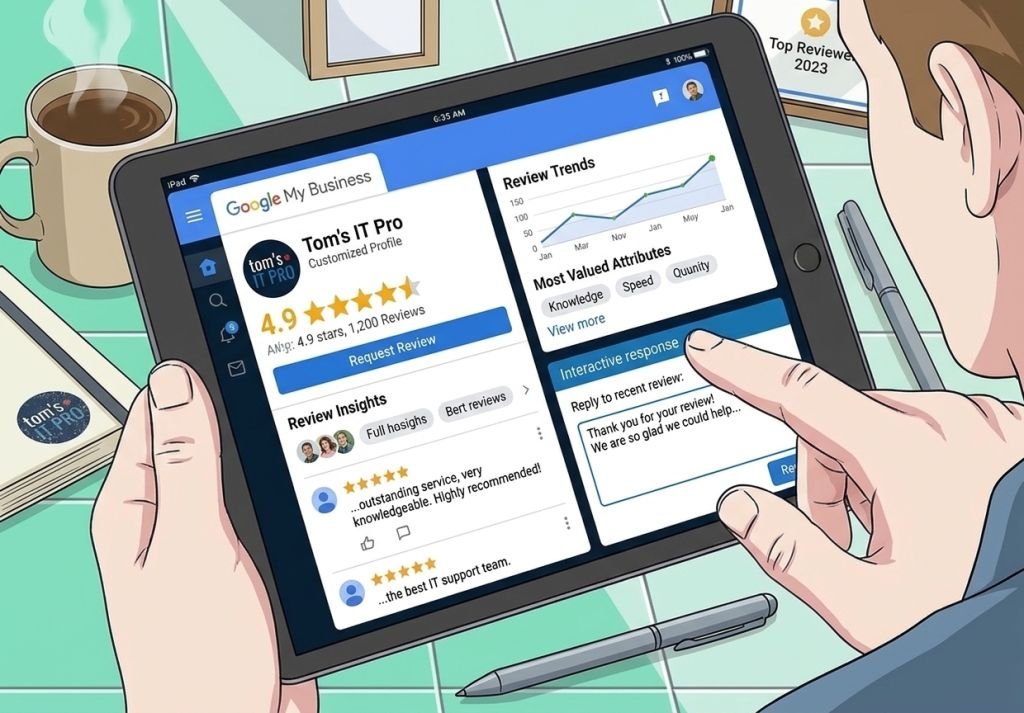
Reviews can be particularly valuable for businesses that sell services or products.
Maintain legitimate profiles on relevant platforms such as:
- Trustpilot
- G2
- Capterra
- Yelp
- Industry-specific review websites
More importantly, make sure your reviews are genuine.
Do not purchase fake reviews or create artificial recommendations simply to manipulate AI systems.
Trustmary highlights reviews and customer experience information as important components of the wider digital footprint that AI systems can evaluate.
A strong review strategy should focus on:
Real customers + recent reviews + detailed experiences + consistent business information.
Step 9: Optimize Your Business Information
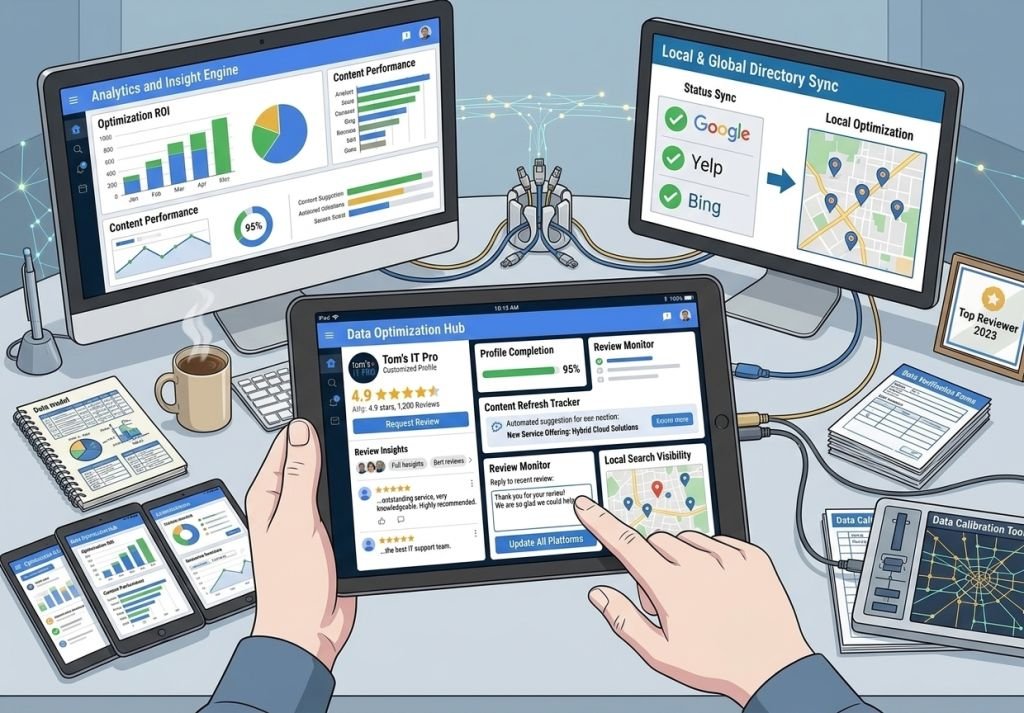
Your brand information should be consistent across the web.
For example, if your company is called Xperlet, avoid having different versions such as:
- Xperlet
- Xperlet Web
- Xperlet Solutions
- Xperlet Digital
- Xperlet Agency
unless these represent genuinely different entities.
Keep important information consistent:
- Brand name
- Website
- Services
- Business description
- Location
- Contact information
- Founder information
- Industry
- Social profiles
Consistency helps establish a clearer entity identity across the web.
Step 10: Use Structured Data Correctly
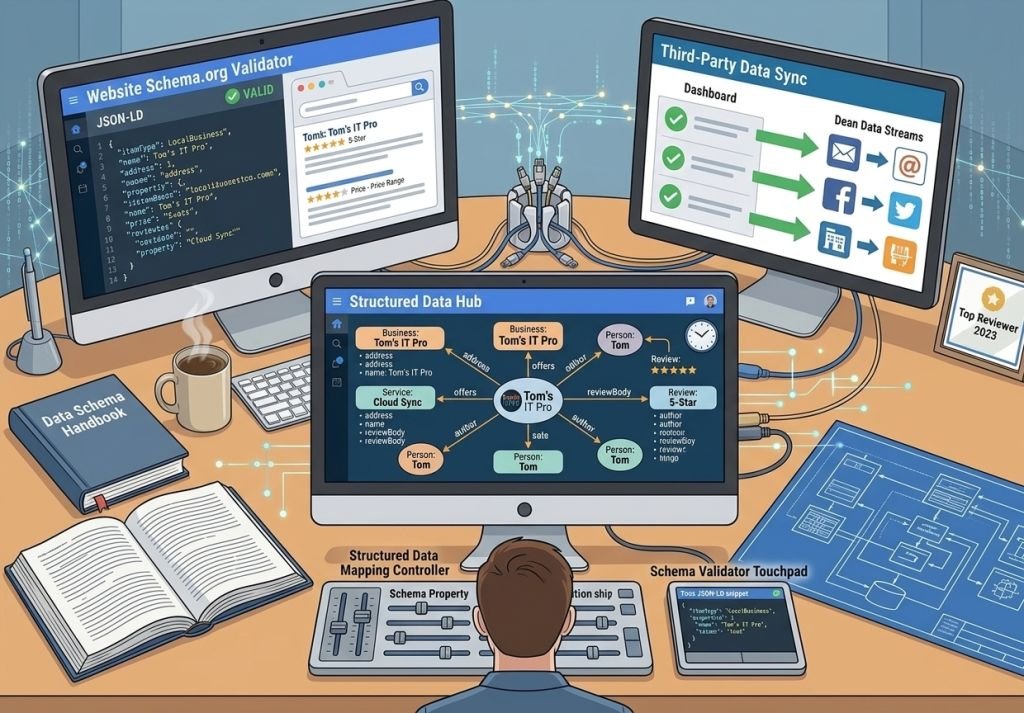
Structured data can help search engines understand your content.
Depending on the website, relevant markup may include:
- Organization
- LocalBusiness
- Product
- Article
- BreadcrumbList
- Review
- FAQ-related markup where applicable
However, structured data should not be treated as a secret “AI ranking hack.”
Google’s current documentation explicitly says there is no special schema.org markup required specifically for generative AI search. Structured data remains useful as part of an overall SEO strategy, but it should accurately represent the visible content on the page.
So the correct approach is:
Use structured data to describe your content accurately — not to manipulate AI systems.
Step 11: Do Not Waste Time on AI SEO Myths
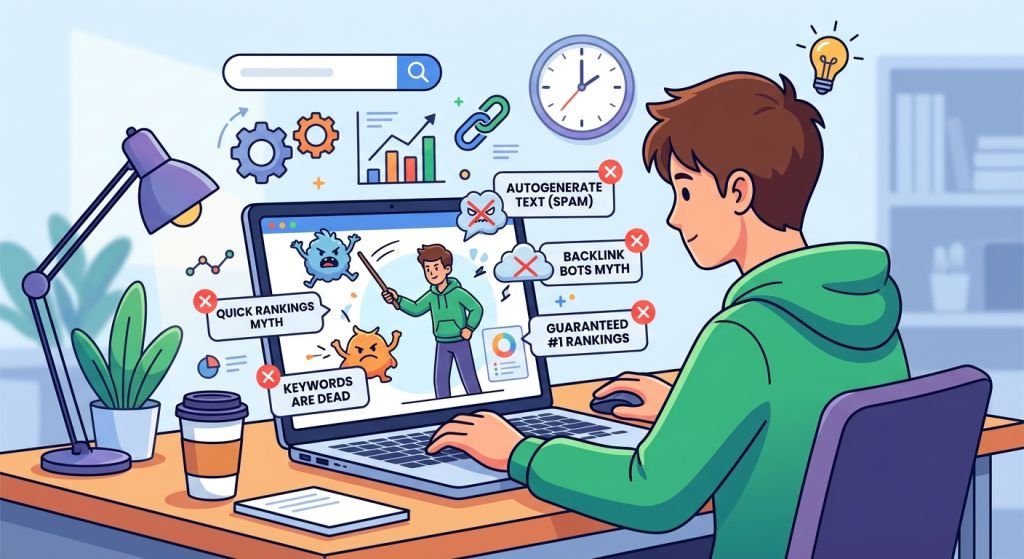
The AI search industry has generated considerable speculation about special optimization techniques.
One example is llms.txt.
Some marketers recommend creating an llms.txt file to improve AI visibility.
However, SE Ranking’s 2026 research reports that llms.txt currently has little to no demonstrated influence on whether systems such as ChatGPT or Google AI Mode select and cite content.
Google’s own documentation goes further, stating that llms.txt does not help or hurt visibility or rankings in Google Search.
Therefore, businesses should prioritize fundamentals such as:
crawlability → quality content → authority → citations → brand presence → user experience
rather than chasing every new AI SEO trend.

Step 12: Build Authority Through High-Quality Backlinks and Mentions
Backlinks remain valuable because they can contribute to a website’s authority and discoverability.
But AI visibility requires thinking beyond traditional link building.
Instead of asking:
“How many backlinks can I build?”
ask:
“Which respected websites should mention my brand?”
For example, a web development agency could aim to be featured in:
- Web development publications
- Ecommerce blogs
- Shopify-related publications
- Digital marketing websites
- Local business publications
- Industry interviews
- Expert roundups
- Relevant comparison articles
A relevant mention from a respected industry publication can be considerably more meaningful than dozens of unrelated directory links.
Step 13: Create Comparison and “Best Of” Content
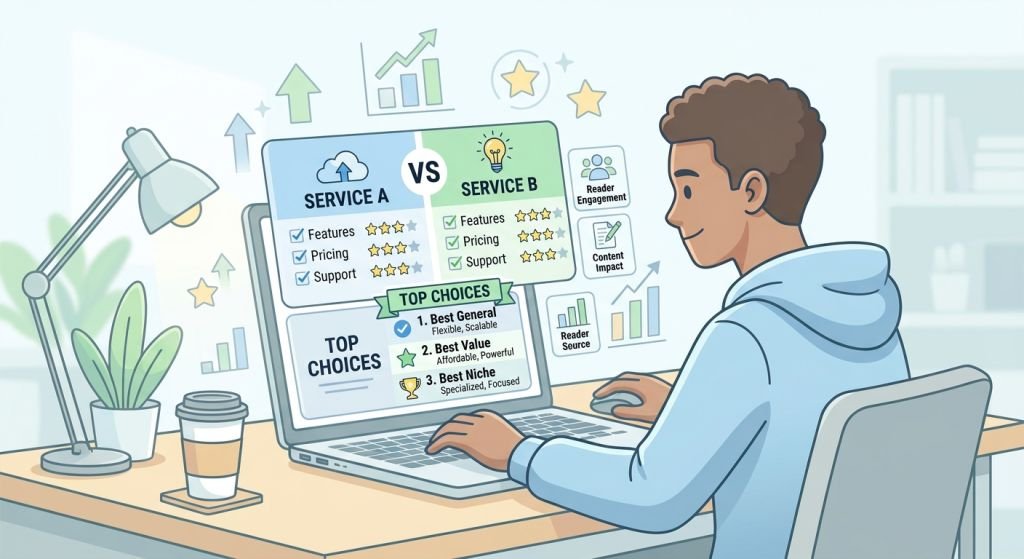
AI users frequently ask comparison-based questions.
Examples include:
- Shopify vs WooCommerce
- Best Shopify developers in Karachi
- Best SEO agencies for small businesses
- Best ecommerce platforms for startups
- Best website builders for restaurants
This makes comparison content an important part of an AI visibility strategy.
However, businesses should avoid creating misleading “best of” articles where they simply declare themselves number one.
Instead, provide transparent criteria:
Price → Features → Experience → Reviews → Pros → Cons → Ideal customer
Objective comparison content is more useful to users and more credible as a reference.
Step 14: Optimize for Conversational Search Queries
Traditional keyword research often focuses on short phrases.
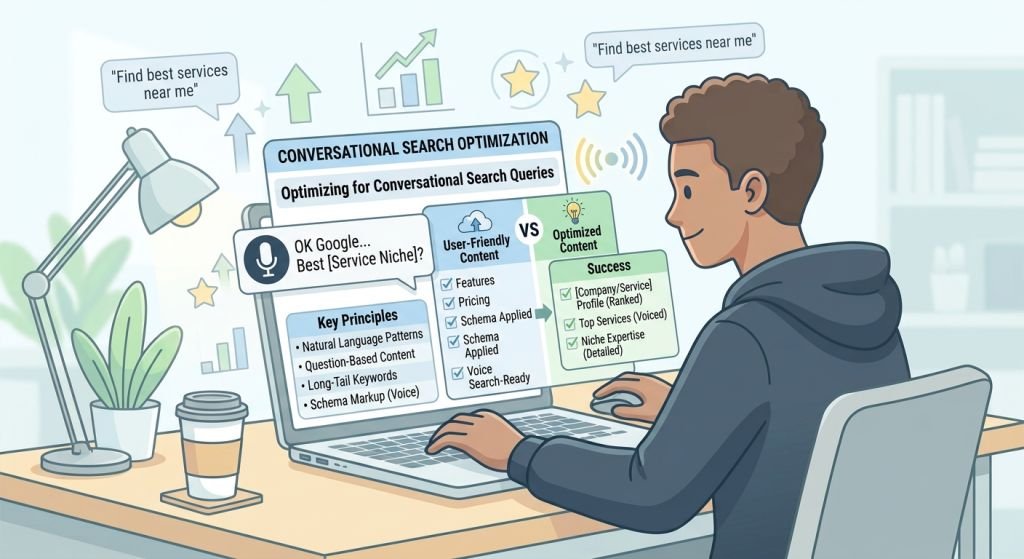
AI searches are frequently more conversational.
Instead of:
“Shopify developer”
a potential customer may ask:
“Can you recommend a reliable Shopify developer for a small fashion business that wants a custom store and ongoing support?”
This means your content strategy should include natural-language questions and specific user scenarios.
Create pages that address:
- Who the service is for
- What problem it solves
- How much it costs
- What the process looks like
- What alternatives exist
- What mistakes customers should avoid
- How to choose a provider
The more completely you answer the underlying intent, the more useful the page becomes.
Step 15: Publish Different Types of Content
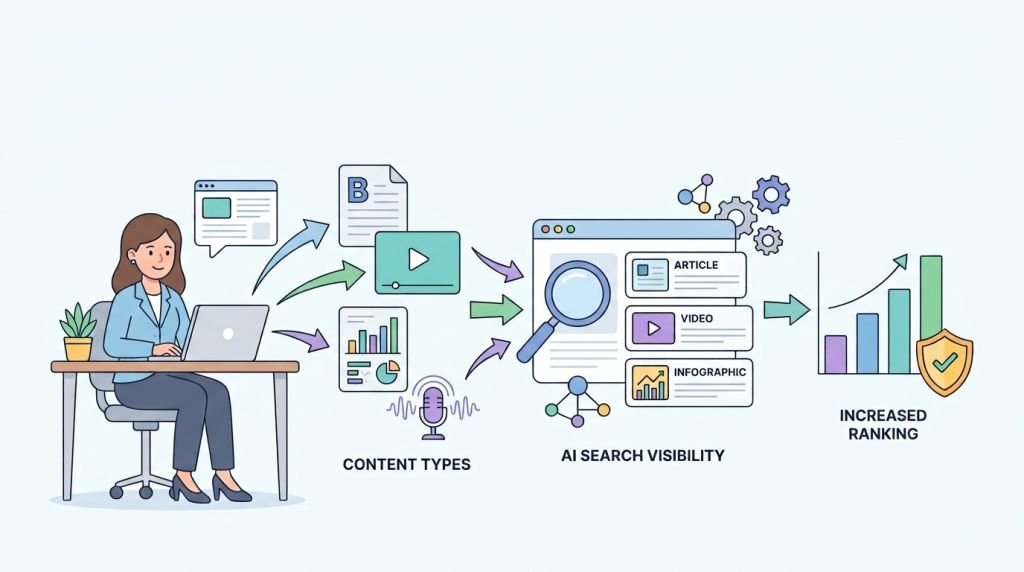
AI visibility should not be limited to blog posts.
Build a broader content ecosystem.
Consider publishing:
Articles
Detailed guides and educational content.
Case studies
Show how your product or service solved a real problem.
Videos
Explain difficult topics visually.
Podcasts
Build expertise and brand recognition.
Original research
Publish data others can reference.
FAQs
Answer highly specific customer questions.
Expert interviews
Build authority and external mentions.
Social content
Distribute insights and encourage discussion.
Google also recommends supporting textual content with high-quality images and videos where appropriate, particularly as search becomes increasingly multimodal.
Step 16: Measure Your AI Visibility
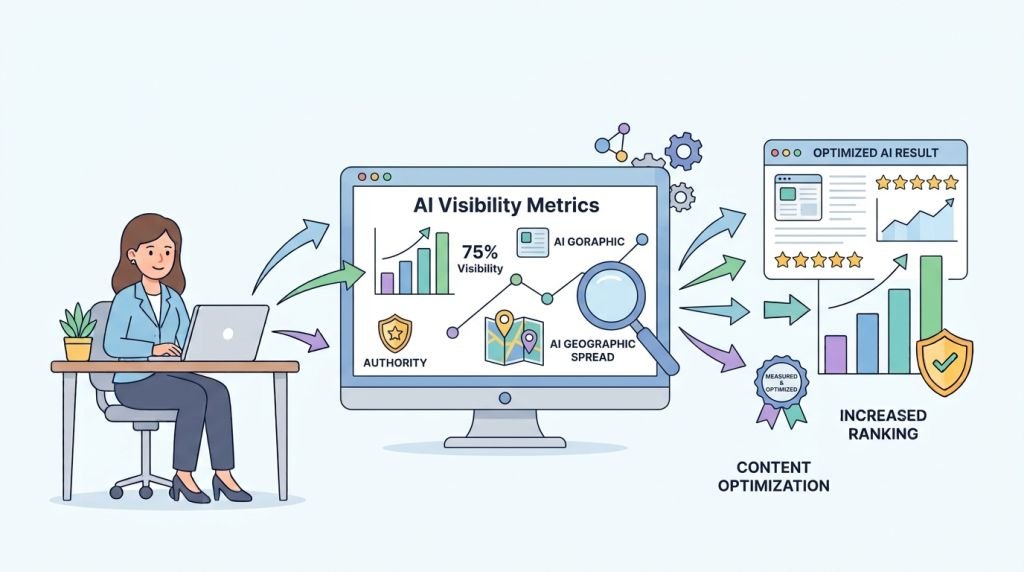
You cannot improve what you do not measure.
Start with a simple manual process.
Create a list of 20–50 questions your potential customers might ask AI.
For example:
“Who are the best Shopify developers in Karachi?”
“What is the best platform for starting an ecommerce business?”
“How much does a Shopify website cost?”
Then test those questions across platforms such as:
- ChatGPT
- Google AI Mode
- Gemini
- Perplexity
Record:
| Metric | What to Track |
|---|---|
| Brand mention | Is your brand mentioned? |
| Position | Where does it appear? |
| Citation | Is your website cited? |
| Competitors | Which competitors appear? |
| Sentiment | How is your brand described? |
| Query | Which questions trigger visibility? |
Semrush recommends tracking brand appearance, links, relative position and how the brand is described.
Dedicated AI visibility tools can also automate much of this monitoring.
Step 17: Find the Questions Where Competitors Appear but You Don’t
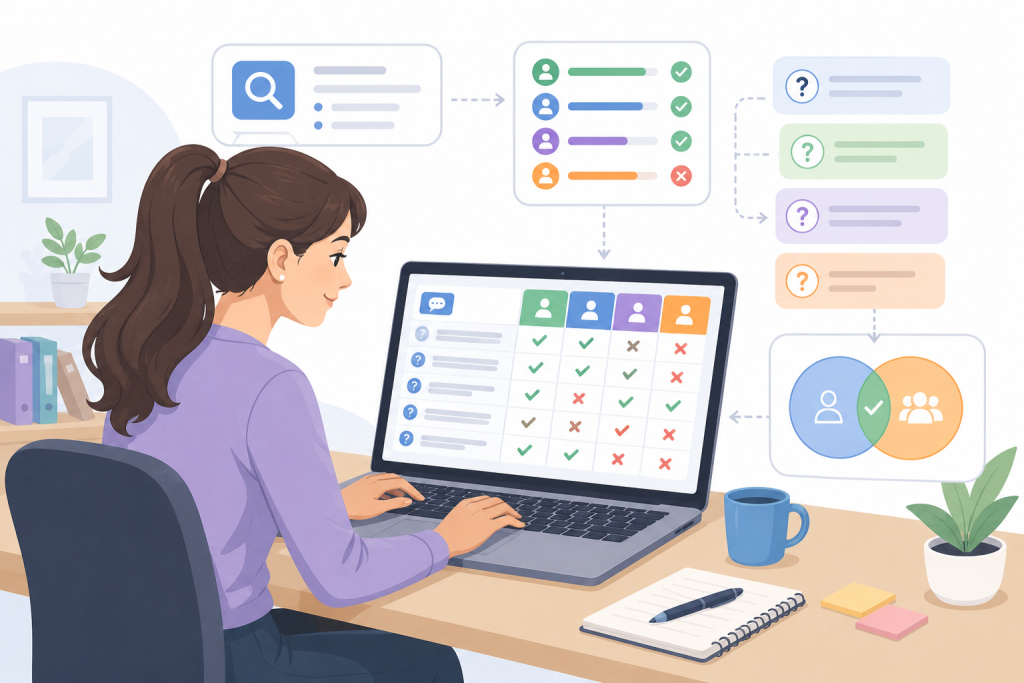
This is one of the most useful AI visibility exercises.
Suppose you test 50 relevant prompts.
You discover:
Your brand: appears in 8
Competitor A: appears in 24
Competitor B: appears in 19
Competitor C: appears in 15
Now investigate the questions where competitors consistently appear.
Look for patterns.
Maybe competitors have:
- More detailed content
- More reviews
- More third-party mentions
- More backlinks
- Better topical coverage
- More case studies
- Stronger brand recognition
- More recent content
These gaps provide a practical roadmap for your content and authority strategy.
Step 18: Keep Your Content Fresh
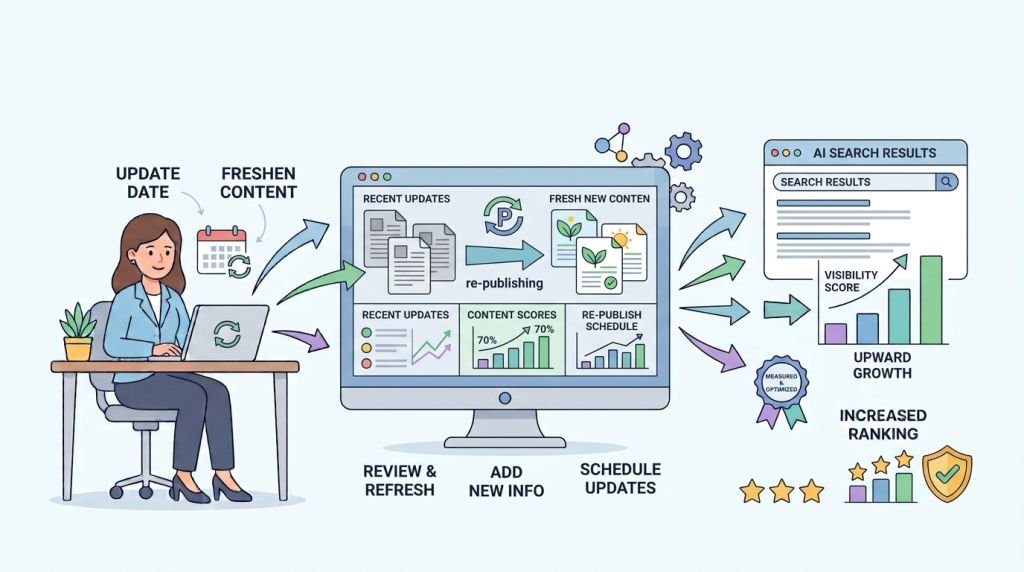
AI search systems and their underlying sources change continuously.
Old information can become inaccurate.
Review important pages periodically and update:
- Statistics
- Prices
- Product information
- Screenshots
- Examples
- References
- Industry developments
- Company information
But do not update pages simply to change the date.
The objective should be to make the content more useful and accurate.
SE Ranking and Trustmary both emphasize freshness and ongoing content activity as part of a broader AI visibility strategy.
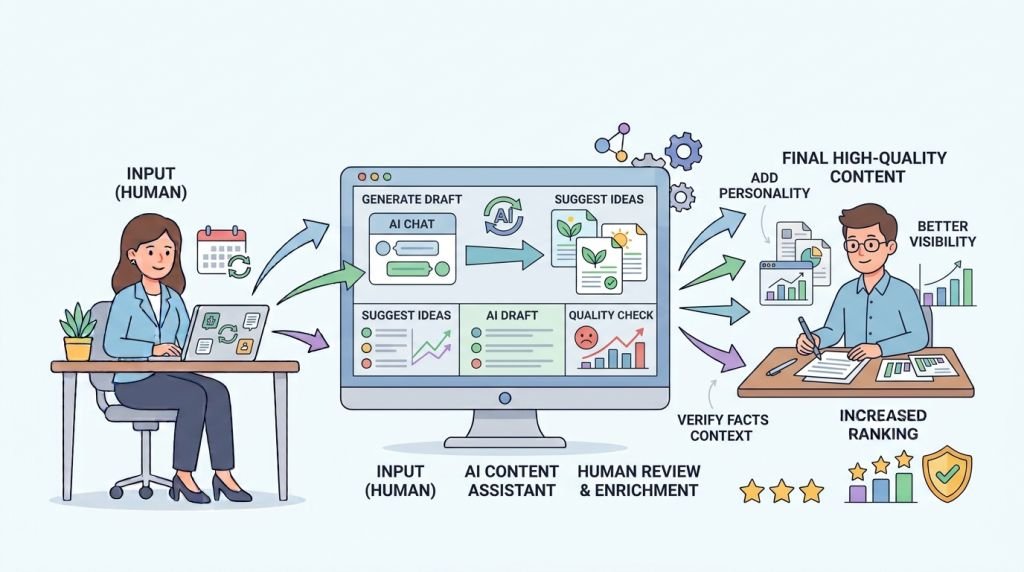
Step 19: Use AI to Help Create Content — But Add Human Expertise
AI can be useful for:
- Research
- Outlining
- Brainstorming
- Content organization
- Summarization
- Finding questions
- Generating first drafts
But publishing large quantities of generic AI-generated articles is not a shortcut to AI visibility.
Google’s guidance states that AI-generated content can be useful, but producing large amounts of content without adding value may violate its scaled-content-abuse policies. Google continues to emphasize accuracy, quality, relevance and originality.
A better workflow is:
AI research → human expertise → original insights → fact checking → editing → publishing
Your experience is the differentiator.

Step 20: Create a Recognizable Expert Identity
AI systems need information about entities, not just pages.
If your website repeatedly publishes high-quality information about a particular subject, while your authors and business are consistently associated with that subject across the web, you can build a stronger topical identity.
Make author information clear where appropriate.
Include:
- Author name
- Professional experience
- Expertise
- Company
- Relevant credentials
- Author profile
- Links to professional profiles
For businesses, clearly communicate:
Who you are → What you do → Who you serve → Where you operate → Why you’re qualified.
A Practical 90-Day AI Visibility Plan
Businesses that want to start immediately can use the following roadmap.
Days 1–30: Technical Foundation
- Audit indexability.
- Check robots.txt.
- Check noindex directives.
- Fix broken links.
- Improve internal linking.
- Submit/update sitemap.
- Check Search Console.
- Review structured data.
- Improve page speed and usability.
- Establish baseline AI visibility.
Days 31–60: Content and Authority
- Identify 20–50 important customer questions.
- Create comprehensive answers.
- Build topic clusters.
- Publish original insights.
- Create comparison content.
- Add FAQs.
- Publish case studies.
- Improve author information.
- Start collecting genuine reviews.
- Pursue relevant industry mentions.
Days 61–90: Expansion and Measurement
- Re-test AI prompts.
- Compare your visibility with competitors.
- Identify missing topics.
- Update existing content.
- Build additional authoritative mentions.
- Expand into video and other formats.
- Monitor brand sentiment.
- Track citations.
- Double down on topics where visibility is improving.
What Businesses Should Avoid
AI visibility is still an emerging discipline, which makes it particularly vulnerable to exaggerated claims.
Avoid strategies such as:
Buying fake reviews
Artificial reviews can damage trust and reputation.
Creating hundreds of low-quality AI articles
More pages do not automatically mean more visibility.
Keyword stuffing
AI systems understand meaning and context; excessive keyword repetition produces poor content.
Building irrelevant backlinks
Quality and relevance matter more than raw backlink volume.
Creating fake brand mentions
Artificially generating references across low-quality websites is not a sustainable strategy.
Obsessing over llms.txt
There is currently no strong evidence that simply creating an llms.txt file will dramatically increase AI visibility. Google’s documentation specifically says it does not affect Google Search visibility or rankings.
Ignoring traditional SEO
AI search does not make technical SEO, useful content, internal linking or indexability obsolete.
The Future of Website Visibility Is Becoming Multi-Layered
The traditional SEO model was relatively simple:
Keyword → Search Result → Click
The emerging AI search model is more complicated:
Question → AI Retrieval → Sources → Synthesis → Recommendation → Citation → Click
That means businesses increasingly need to think about being discoverable, understandable, trustworthy and recommendable.
Ahrefs notes that AI visibility is still in its early stages, creating an opportunity for businesses that begin measuring and improving their presence now.
Google’s latest guidance also reinforces an important point: businesses do not need to abandon SEO or chase a secret AI ranking formula. Google’s recommendation remains centered on valuable, unique content, strong technical foundations, accessibility and satisfying user needs.
Final Takeaway
Increasing AI visibility is not about finding one technical trick that makes ChatGPT recommend your website.
It is about building a strong digital footprint that AI systems can discover, understand and trust.
The most effective strategy is therefore:
1. Make your website crawlable.
2. Maintain strong technical SEO.
3. Create genuinely useful, original content.
4. Answer the questions your customers ask.
5. Build topical authority.
6. Earn relevant third-party mentions.
7. Collect genuine reviews.
8. Strengthen your brand identity across the web.
9. Monitor AI-generated answers.
10. Continuously improve based on competitor gaps.
The companies that start building this foundation now will be better positioned as AI-powered search becomes a larger part of how customers discover businesses online.
AI visibility is not replacing SEO. It is expanding the definition of what it means to be visible online.